

About this paper
This is the real Mzumbe LAW 228 Law of Evidence II paper from the End of Semester II/Re-sit Examination, June 2007, sat by LL.B Year 2 students at Mzumbe University. It has 6 questions and you answer 4. Read every page of the exam as set below; model answers are being written and checked.
Part 1
Mzumbe Law of Evidence II Past Paper (LAW 228): The Full Exam as Set
Six questions. Attempt any four. Clean copies of the course outline and the Evidence Act allowed. All questions carry equal marks.
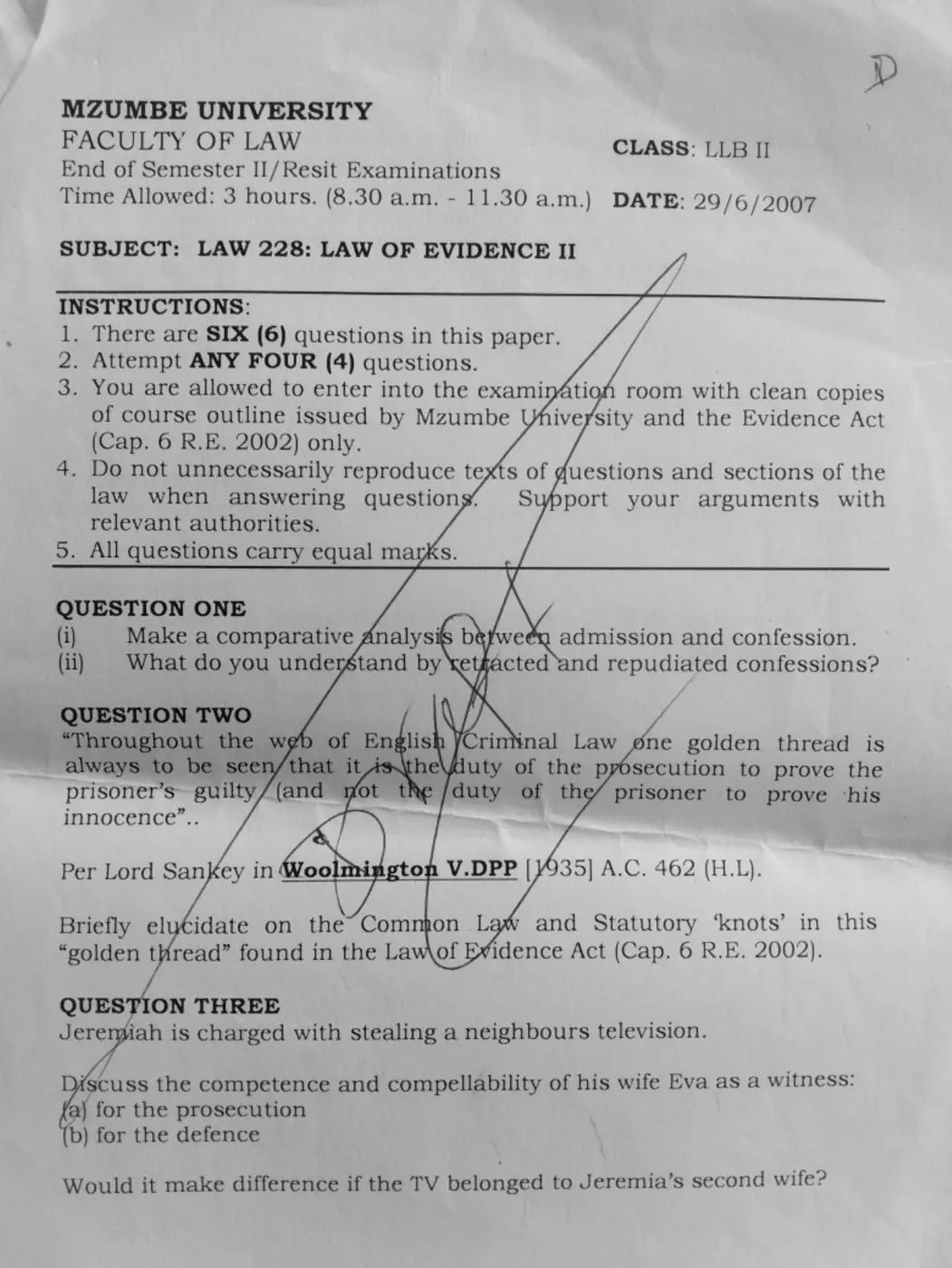
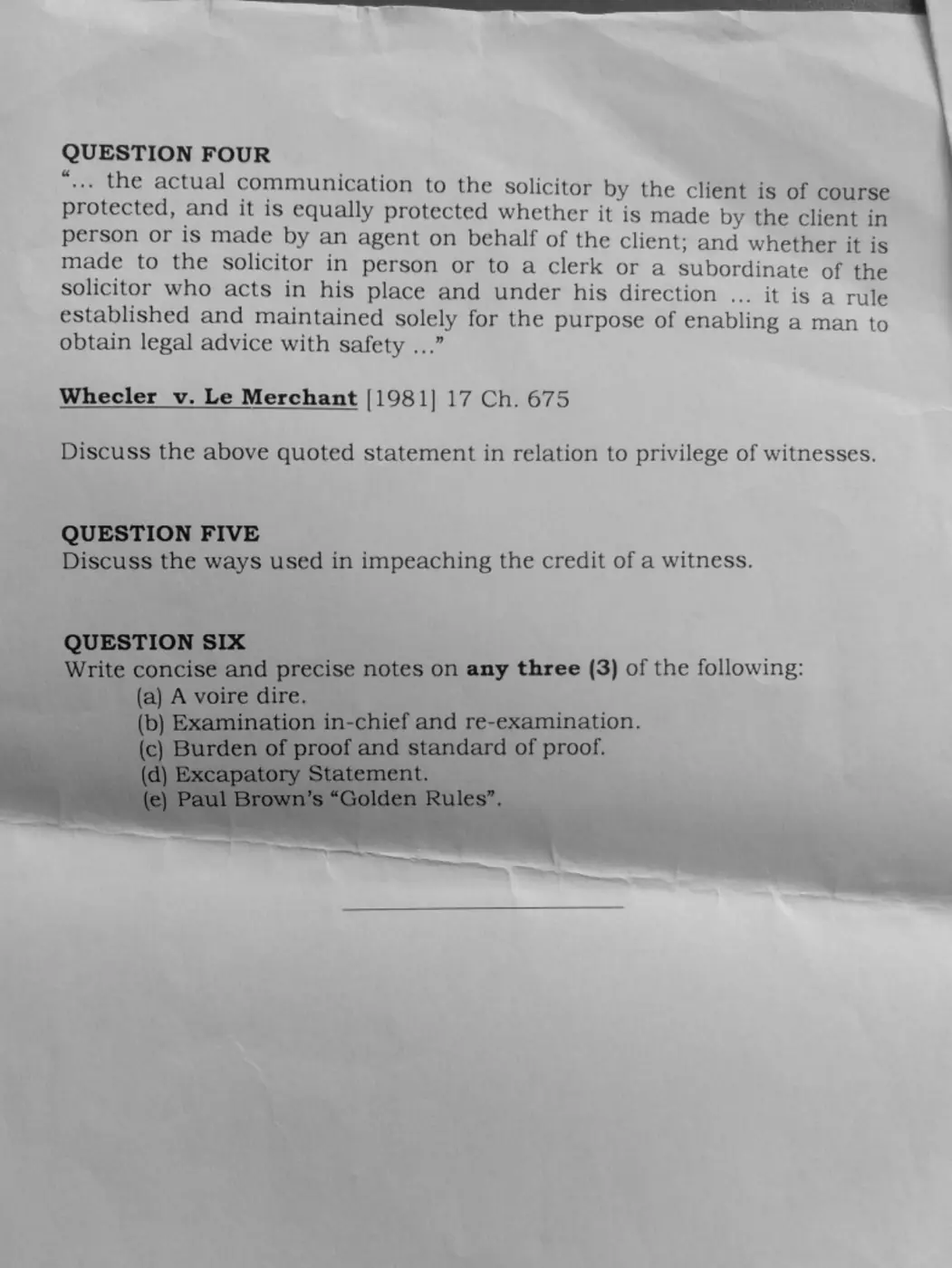
Source: Mzumbe University examination paper, June 2007, shared for revision. Rights holders can ask for removal through our Contact page.
Part 2
Law of Evidence II Past Paper Answers: Model Answers Coming Soon
Every question on this paper is being answered in full: the issue, the law (Tanzanian statutes and Court of Appeal cases, each checked), how to apply it to the facts, and the conclusion the examiner wants. Each answer is reviewed by Isack Kimaro, LL.B, PDLP before it goes live.
- A full model answer to every question
- The Question 1 answer free for everyone
- What the examiner wants, and the mistakes that cost marks
While you wait, revise with the Law of Evidence notes or open a past paper that is already solved.
Mzumbe Law of Evidence II Past Paper: Common Questions
Is this the real Mzumbe Law of Evidence II exam paper?
Yes. These are scans of the End of Semester II/Re-sit Examination, June 2007 paper for LAW 228 Law of Evidence II at Mzumbe University, sat on 29 June 2007. Nothing has been retyped or changed.
How many questions do you answer in this Law of Evidence II paper?
Six questions. Attempt any four. Clean copies of the course outline and the Evidence Act allowed. All questions carry equal marks.
Are there answers to this past paper?
Model answers are being written and checked by a Tanzanian lawyer. Create a free account or join the list on this page and we will tell you when they go live. Elite members get every solved paper included.
How do I see every page of the paper?
The first pages are open to everyone. Create a free account to read the whole paper.